Septic tank additives and treatments: do they actually work?
Walk down the plumbing aisle of any hardware store in Savannah and you’ll find a shelf of bottles promising to “boost,” “restore,” or “supercharge” your septic tank. Pour it in
Local diagnosis and repair for soggy ground, sewage odors, slow septic flow, damaged field lines, poor absorption, and coastal groundwater challenges.
Drain field repairs address the part of a septic system that returns treated effluent to the soil. When that area stops accepting wastewater correctly, the warning may appear outside as wet ground and odor or inside as slow drains, gurgling, and backups that return even after the tank has been pumped.
Gray Septic Solutions provides drain field evaluation and repair throughout Savannah, GA and nearby Coastal Georgia communities. We examine the relationship between the tank, outlet, pump equipment, distribution piping, field lines, soil conditions, water use, surface drainage, and recent weather before deciding whether the absorption area is actually responsible.
Our local, owner-operated company is licensed and insured, with 7 trucks serving daily and 24/7 availability when a field problem causes surfacing wastewater or an urgent building backup. Call 912-661-4089 for a clear diagnosis and a repair plan built around the property.
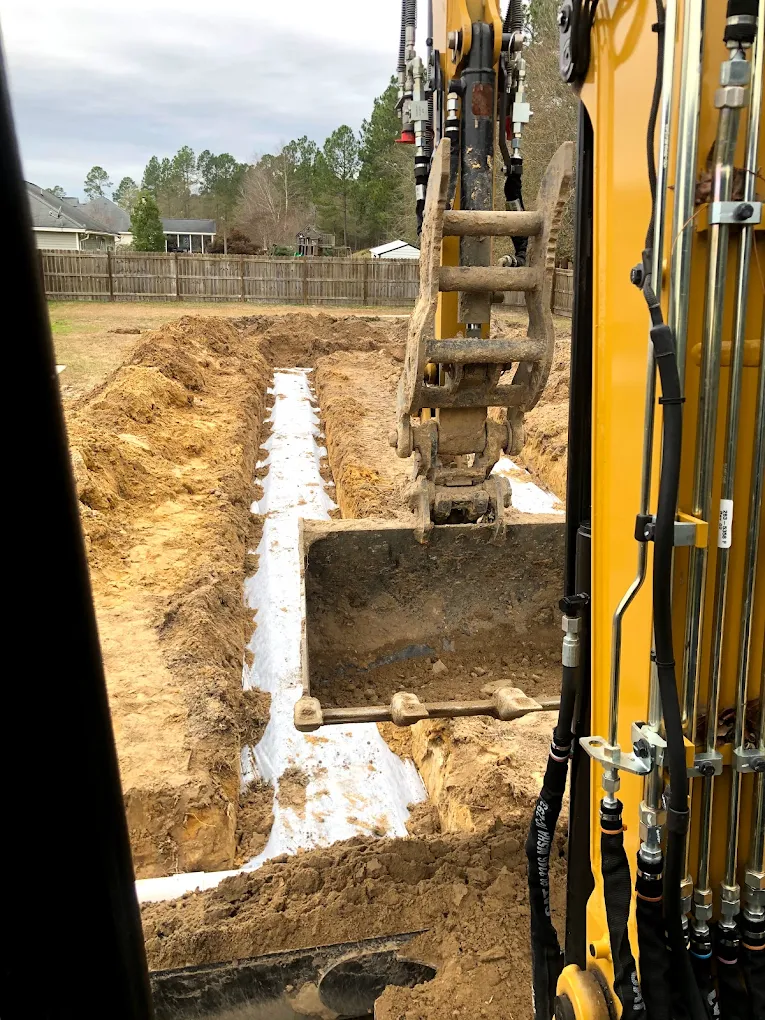
The drain field receives liquid effluent after solids separate inside the septic tank. Distribution piping spreads that flow through an approved soil absorption area, where unsaturated soil continues wastewater treatment. The process depends on open piping, appropriate loading, usable soil, and enough separation from groundwater.
Problems elsewhere can create the same symptoms as field failure. A full tank, damaged outlet baffle, blocked line, failed pump, leaking fixture, roof runoff, or saturated yard may all change the way wastewater moves. That is why diagnosis must come before excavation or a recommendation for complete replacement.
Wet soil near the septic area can mean effluent is reaching the surface because the field cannot accept it fast enough. The ground may feel soft underfoot, hold standing water, or remain damp long after the surrounding yard dries. Sewage odor or gray wastewater makes the condition more concerning. Not every wet spot is septic-related. Irrigation leaks, roof drainage, grading, groundwater, and ordinary stormwater can collect in the same part of a flat Savannah property. Our team considers the location, timing, weather, plumbing use, and system layout to avoid treating unrelated drainage as a failed field.
A functioning absorption field should not release persistent sewage odor at the surface. Smell near the tank, distribution area, low ground, or a specific field line may indicate wastewater surfacing, poor absorption, a damaged component, or venting from a system under stress. Odor can change with rainfall, temperature, wind, and household water use, so the pattern matters. We ask whether the smell follows laundry, appears only after storms, becomes stronger near an access lid, or accompanies slow fixtures and wet ground.
Pumping a full tank can restore temporary storage, but it does not repair soil that cannot absorb effluent or a field line that no longer distributes flow. If fixtures improve briefly and then slow again as liquid returns to the tank, the downstream path needs closer evaluation.
Gray Septic Solutions checks for outlet restrictions, pump problems, damaged piping, abnormal tank levels, and field symptoms. That whole-system review helps homeowners avoid paying for repeated relief when the actual failure remains beyond the tank.
One slow sink may involve a local plumbing clog. Several fixtures slowing or gurgling together can indicate that wastewater is meeting resistance farther downstream, especially when toilets, tubs, and lower drains change at the same time.
A struggling drain field is one possibility, but the building sewer, tank inlet, tank outlet, pump chamber, and discharge line can create similar behavior. We trace the symptom through the system before assigning it to the absorption area.
Grass that is noticeably greener than the rest of the yard may receive additional moisture or nutrients from below. By itself, color does not prove that sewage is surfacing, particularly during changing seasons or after fertilizer use.
The sign becomes more meaningful when the soil is also soft, the area smells, or indoor drainage has changed. Our evaluation uses the full group of observations rather than relying on the appearance of one patch of lawn.
Distribution piping can be damaged by roots, soil movement, vehicle traffic, excavation, or aging materials. Lines may also receive flow unevenly when a distribution component fails, allowing one section to become overloaded while another part of the field remains underused.
Targeted line or distribution repair may be possible when the failure is localized and the remaining absorption area is still serviceable. The condition, layout, permitting requirements, and cause of the damage all influence whether repair is appropriate.
Cars, trucks, construction equipment, sheds, material storage, and repeated foot or equipment traffic can compact soil or crush buried components. Compaction reduces the pore space that helps soil accept and treat wastewater, while structural damage can concentrate effluent in one location.
Keep vehicles away from the known drain field and reserve area. Before a construction or landscaping project begins, mark the septic system and establish access routes that do not cross tanks, lines, or absorption trenches.
Every gallon entering the septic system eventually needs a safe path through the field. The U.S. EPA estimates that indoor use can reach about 70 gallons per person each day, so leaks, several loads of laundry, long fixture use, or a sudden increase in occupancy can overwhelm a field that is already marginal.
Roof drains, sump pumps, irrigation, and grading should not direct extra water toward the absorption area. Reducing unnecessary flow may help a temporarily saturated system recover, but water conservation cannot reverse structural damage or long-term soil clogging.
Savannah-area drain fields operate in a landscape where flat lots, intense rain, and elevated seasonal groundwater can reduce the unsaturated soil available for treatment. A Chatham County review of one Whitemarsh Island area reported an average seasonal high water table near 28 inches, while conventional systems require 24 inches of separation in the conditions discussed.
That narrow local margin illustrates why a field can become sensitive to storms even when it appears normal during dry weather. We compare recent rainfall and surrounding drainage with the system's ongoing performance before deciding whether symptoms represent temporary saturation or deeper failure.
Why Savannah calls Gray Septic Solutions for drain field repair
Drain field symptoms can be misleading, and the wrong conclusion can lead to unnecessary yard disturbance or another service that does not last. A professional repair company should be willing to distinguish weather, plumbing, tank, pump, line, and soil absorption problems before recommending major work.
Gray Septic Solutions brings complete septic capabilities to homes, rental properties, commercial sites, island lots, and rural properties across Coastal Georgia. We can follow the diagnosis beyond the field when the actual cause lies elsewhere in the system.
We begin with the symptoms, system path, recent weather, water use, and visible site conditions. Digging starts only when the findings and approved scope support it.
The tank outlet, pump chamber, distribution components, and absorption area work together. Our team looks for the failed link instead of treating every outdoor symptom as a soil problem.
Targeted repair and complete replacement are different services. We explain when the existing field has a reasonable repair path and when its overall condition points toward a new absorption area.
High groundwater, heavy rainfall, sandy soils, marsh-adjacent lots, flat grading, and island access can change diagnosis and equipment planning. Our local crew understands those conditions.
Tank pumping, inspections, pump work, line cleaning, tank repair, field repair, and replacement planning are available from one company. Customers do not need to restart the diagnosis when another component becomes involved.
Fences, mature landscaping, pools, driveways, utilities, and waterfront constraints can limit the work area. We review access before bringing excavation equipment onto the property.
Fleet capacity supports scheduled evaluation, maintenance, repair projects, and urgent septic response across Savannah and surrounding communities.
Drain field work involves wastewater, soil, excavation, and applicable repair requirements. Gray Septic Solutions provides professional handling and 24/7 availability when the situation becomes urgent.
Drain field work should begin with evidence, not an assumption based on one wet area. Gray Septic Solutions traces the symptom through the system, evaluates the repair choices, and closes the project with guidance for protecting the absorption area.
The process adapts to residential and commercial properties, gravity and pump-assisted systems, recent storms, and prior maintenance. Each factor can change what the crew needs to inspect and which repair path makes sense.
We document slow drains, gurgling, backups, odor, wet ground, pump alarms, recent tank service, and changes after heavy rain or water use. The crew reviews known system locations and considers the building sewer, tank inlet and outlet, liquid level, accessible baffles, pump equipment, distribution path, and absorption area.
Surface drainage is evaluated at the same time. Roof runoff, irrigation, grading, natural low spots, and groundwater can create or worsen wet conditions without originating inside the septic system. Separating those sources helps avoid unnecessary field work.
Once the likely cause is clearer, we explain the available options. The scope may involve restoring distribution, repairing damaged field piping, correcting tank or pump conditions that overload the field, protecting the area from traffic, or performing more involved absorption-area work.
Georgia guidance states that repair work on an onsite sewage management system requires a repair permit. Local Environmental Health review and inspection may apply based on the property and scope, so Gray Septic Solutions keeps the field work aligned with the appropriate process.
After repair, we review how wastewater is moving through the affected components and explain what the owner should monitor. If the work reveals widespread loss of absorption capacity, we state that clearly and discuss whether the replacement page and process now match the property’s needs.
Long-term protection includes regular pumping, fixing water leaks, spreading laundry use, keeping vehicles and structures off the field, redirecting excess drainage, and maintaining access to the tank and distribution components. These steps protect the repair but do not replace professional service when warning signs return.
Complete septic care for residential and commercial properties across the Coastal Empire.
From routine pump maintenance to full replacements, we keep your septic system running reliably so you’re never caught off guard.
From site evaluation to final installation, we provide dependable septic tank installation services designed for your property’s specific needs.
Expert grinder pump installation, repair, and maintenance for commercial properties requiring advanced wastewater management solutions.
High-pressure jetting clears out stubborn blockages, grease buildup, and root intrusion that regular snaking can’t always reach.
Heavy-duty maintenance for restaurants and large commercial facilities.
Restore proper drainage and efficiency with trusted drain field repairs.
Restore proper drainage and efficiency with trusted drain field repairs.
A thorough inspection gives you a full picture of your system’s condition, whether you’re buying a home or staying on top of maintenance.
Expert pump replacement using durable, high-quality components.
Don’t just take our word for it.
Everything you need to know about drain field replacement in Savannah, GA.
Common warning signs include soft or standing water over the septic area, sewage odor outdoors, unusually green growth, several slow fixtures, gurgling, indoor backups, surfacing wastewater, and a tank that appears to refill soon after pumping.
These signs overlap with tank, pump, and line failures. Gray Septic Solutions evaluates the connected system before deciding whether the absorption field is the source.
Rain can raise groundwater and saturate the soil, especially on flat Coastal Georgia lots. Roof runoff, irrigation, poor grading, plumbing leaks, or natural low areas may also keep one part of the yard wet after a storm.
If the area is over the drain field and also has sewage odor, gray water, slow plumbing, or a high tank level, arrange a septic evaluation. Weather can reveal an existing weakness without being the only cause.
Pumping removes solids and reduces the liquid stored in the tank, which may provide temporary relief. It is necessary maintenance and can protect the field when performed before solids move downstream.
Pumping does not restore soil that has lost absorption capacity or repair broken distribution piping. When symptoms return quickly, the outlet, pump equipment, lines, and field need further diagnosis.
Yes, some failures support targeted repair. Damaged distribution components, isolated piping problems, traffic damage, related tank or pump issues, and uneven loading may be repairable when the remaining field is still functional.
Broad soil clogging, repeated overload, inadequate sizing, severe damage, or a field that has exhausted its usable area may require replacement. The decision should follow an on-site evaluation rather than a general age rule.
Repair corrects a defined problem within or affecting the existing absorption system. Replacement creates a new field when the current one cannot be restored to dependable operation through focused work.
Gray Septic Solutions maintains separate pages for these services so property owners can understand the difference. The repair page addresses diagnosis and correctable conditions, while the replacement page covers full field construction after confirmed failure.
It becomes urgent when sewage is backing into the building, wastewater is surfacing where people or pets may contact it, toilets cannot be used, or a pump alarm accompanies rising liquid levels. Stop unnecessary water use and keep people away from contaminated areas.
Gray Septic Solutions provides 24/7 emergency availability for serious drain field and septic problems in Savannah and surrounding service areas.
Georgia homeowner guidance states that repair work performed on an onsite sewage management system requires a repair permit. The specific review and inspection steps depend on the jurisdiction, property, and proposed work.
Our team can explain the field repair scope and coordinate applicable septic requirements. Avoid unapproved alterations because absorption area layout and system capacity affect health, property use, and future sale or development.
The timeline depends on diagnosis, repair type, access, excavation, weather, soil saturation, materials, permitting, and whether another system component must be corrected first. A localized line repair differs substantially from broader absorption-area work.
Gray Septic Solutions defines the recommended scope after evaluation and discusses the factors that may affect scheduling. We do not promise a universal completion time before the site and system are understood.
Cost can change with the failed component, field layout, depth, property access, excavation needs, soil conditions, permits, restoration, and whether tank, pump, or line work is also required. A wet yard alone is not enough information for a responsible price.
An on-site diagnosis separates focused repair from replacement and reduces the risk of estimating the wrong service. Gray Septic Solutions provides a documented scope before approved work begins.
No. Vehicles and heavy equipment can compact the soil and damage distribution lines, while sheds, patios, pools, additions, and paved areas can block access and interfere with absorption. The field and reserve area should remain protected.
Locate septic components before construction, deliveries, tree work, or major landscaping. Establish alternate traffic and storage areas before equipment arrives.
Keep traffic and structures off the field, redirect roof and sump drainage, repair leaking fixtures, avoid sending several high-water-use activities through the system at once, and maintain a pumping schedule based on the tank and household use.
Use shallow-rooted grass or approved cover and avoid deep-rooted trees near field lines. Preserve access to the tank and distribution components so future inspection and maintenance do not require disturbing new improvements.
Do not rely on additives to repair broken piping, compacted soil, hydraulic overload, high groundwater, or a broadly failed absorption area. Products cannot substitute for pumping, diagnosis, permitted repair, or replacement when physical conditions prevent wastewater treatment.
Yes. Gray Septic Solutions evaluates and repairs commercial drain fields as well as residential systems. Business properties may have higher flow, pump equipment, grease-producing uses, customer or employee restrooms, and limited windows for service.
Commercial diagnosis accounts for wastewater demand, access, operating hours, maintenance history, and the impact of a system interruption. Related tank, pump, line, and grease services are also available when the field is only one part of the problem.
Walk down the plumbing aisle of any hardware store in Savannah and you’ll find a shelf of bottles promising to “boost,” “restore,” or “supercharge” your septic tank. Pour it in
Living outside the reach of city water and sewer lines has real advantages, but it also puts homeowners in direct control of two systems that most people never think about:
A septic system rarely fails at a convenient time, and when it does, the repair bill can land somewhere most household budgets were not planning for. Whether the problem is
Not sure if we serve your area? Give us a call at 912-661-4089.
Get your free estimate today and let our experienced local team handle the dirty work.
If your yard stays wet, smells like sewage, or shows septic symptoms that return after pumping, Gray Septic Solutions can help determine whether the drain field needs repair. We serve homes and businesses throughout Savannah, GA and Coastal Georgia.
Schedule an evaluation before wastewater reaches the surface or a slow system becomes an indoor backup. Our team will trace the problem, explain repair and replacement paths clearly, and prepare a free estimate for the appropriate work.
Available 7 days a week.
Emergency Service Available 24/7
Proudly serving the greater Savannah region.